
Seeing Underground: What Zanskar’s “Big Blind” Reveals About Predictive GIS

If you follow energy news at all, you have probably seen the big Nevada headline today. Zanskar Geothermal & Minerals just announced the discovery of “Big Blind,” a commercially viable geothermal power site in a place with no visible signs of heat at the surface. No steam. No hot springs. Nothing obvious.
It is a huge moment for renewable energy. It is also a quiet win for something our world revolves around every day: well organized spatial data.
Most headlines lean hard on the “AI found it” angle. But anyone who has spent time in GIS knows the truth. AI is only as strong as the spatial data infrastructure underneath it. So let us pull the camera back and talk about how GIS mapping and spatial analysis make discoveries like Big Blind possible.
The layer cake behind geothermal discovery
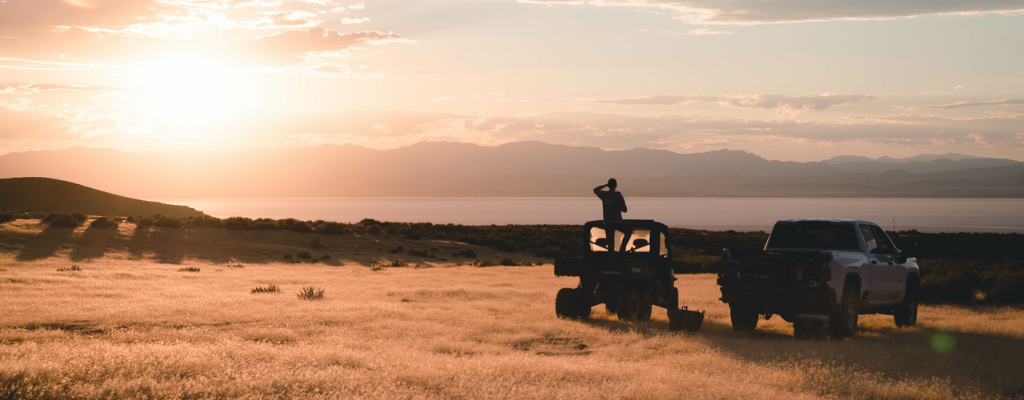
Historically, geothermal exploration worked a lot like hunting for buried treasure with a minimal map. You started where the clues were obvious: hot springs, fumaroles, steam vents, or places with a long history of geothermal activity.
In GIS terms, that usually meant a basic multi layer model. Even if you never called it “Multi Criteria Decision Analysis,” that is essentially what was happening:
- Geology: Faults and fractures that let fluids move.
- Lithology: Rock types that are more or less permeable.
- Heat flow: Temperature gradients from wells or published studies.
- Constraints: Land use, protected areas, transmission lines, access.
On a map, you stack those layers and look for places where the conditions line up. Those intersections become the short list for more detailed study and maybe a test well. The catch with Big Blind is simple. Those surface clues were not there to help.
How GIS plus AI “see” what humans might miss
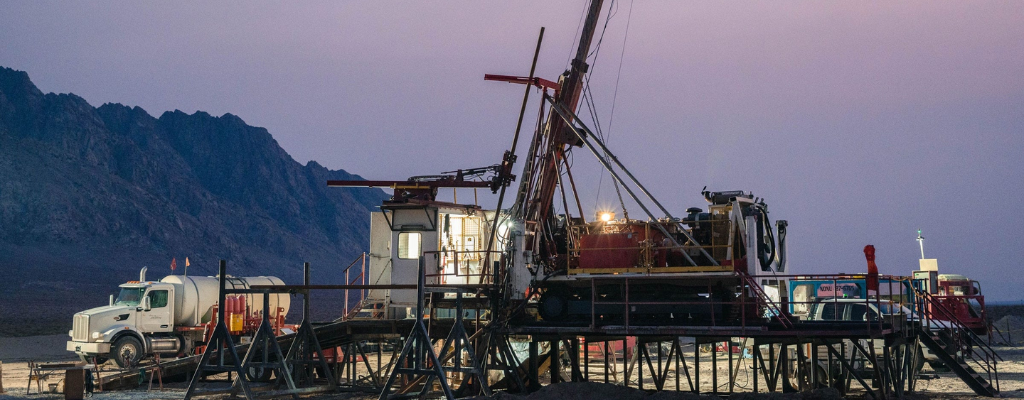
Big Blind is called a blind system because nothing at the surface told you it was special. That is where the combination of GIS and AI starts to matter. Instead of just doing visual overlays, Zanskar pulled together a huge amount of spatial data into one analytical framework. Think of it as a very dense, very smart grid across the landscape where every cell knows something about the rock, the heat, and the structure below.
Inputs likely included:
- Gravity and magnetic surveys to pick up changes in density and deep structure
- Seismic data to hint at faults and fractures that can carry hot fluids
- Remote sensing and ground deformation to show subtle movement over time
- Existing wells and temperature logs for hard evidence of heat
Traditional GIS can already bring these into a single map. AI is the layer on top that looks for patterns across all of them at once and assigns probabilities instead of just “yes” or “no.”
A human analyst can scan a handful of layers and make reasonable judgments. A machine learning model can scan hundreds of combinations across a region and flag places that do not look impressive by eye but score high statistically. Smarter spatial analysis means fewer guesses.
From descriptive maps to predictive maps
For GIS teams, the lesson is not to throw out your old workflows. It is that our maps are shifting from descriptive to predictive.
- Descriptive mapping answers “Where are the faults, wells, plants, and lines?”
- Predictive mapping starts to answer “Where are the next good sites likely to be?”
Zanskar’s work hints at a future where geothermal exploration across the western United States is guided by probability surfaces, not just expert intuition and scattered maps. The data itself is not new. The way it is combined is.
That same pattern applies anywhere you have:
- Complex physical systems
- Decades of scattered spatial data
- High cost if you guess wrong
Flood risk, pipe failures, landslides, leak detection, habitat modeling — all of them benefit from a move toward predictive mapping.
What this means for you
Most organizations are not going to build a geothermal prediction engine from scratch. But the underlying practice is very familiar and repeatable:
- Centralize the spatial data you already own
Pull geology, utilities, land use, environmental layers, and infrastructure into one GIS environment instead of letting them live in silos and spreadsheets. - Standardize how you structure the map
Organize data into logical themes: base maps, infrastructure, environment, operations, risk. Use consistent attributes and clear symbology so your future models have something clean to work with. - Expose maps through simple interactive tools
Give planners, engineers, and decision makers a way to explore layers, test scenarios, and see “what if” results without needing to be GIS power users. - Leave room for smarter analytics later
Once your maps and services are consistent, you can start adding more advanced analytics. That might be as simple as weighted overlays or as advanced as connecting to AI models that generate risk or suitability scores.
First you get your spatial house in order. Then you connect it to smarter tools. The Nevada story is a glimpse of where that road leads when the stakes are high and the data is deep. It’s a fun way to observe technology breaking news and analyze how it can be dialed down to more practical GIS uses.
The energy story hiding in your data
Big Blind is a win for geothermal and for the idea that there is still a lot of untapped potential under our feet. It also sends a clear message to GIS and utilities teams working far from Nevada. The next breakthrough does not always require a brand new sensor or a brand new dataset. It often starts with data you already have, brought together in a disciplined way, served through interactive maps, and opened up to better analysis.
AI may get the headline, but GIS is the foundation. Without the right maps, the smartest model in the world has nowhere to stand. If you want to chat about how we can help you organize your map layers or create custom dashboards to meet your organization’s needs, contact us. We’ll even give you a 90-day free demo using your own data so you can see for yourself.
Discover More:
Geothermal company makes big discovery using AI
Zanskar Reveals ‘Big Blind’ – The Discovery of the First Blind Geothermal System in the U.S.
Geothermal Data and Tools
Mapping the Great Thanksgiving Migration